

Complete Story
04/24/2026
Louisiana’s Nuclear Renaissance Is All About the Chemistry
By: Patrick Riley
Director of Government Affairs & Assistant General Counsel
With the 2026 Louisiana Nuclear Strategy Summit starting next week, interest in nuclear energy and Louisiana’s role in its future is continuing to grow. When most people think about nuclear power, they picture reactors and cooling towers. What they usually don’t picture is chemistry.
Before a reactor can produce a single electron, uranium has to be converted, processed, purified, fabricated, and maintained through a long series of chemical steps. The fuel doesn’t go straight from the ground into a reactor. It passes through chemical plants and specialized manufacturing first. Many of those steps depend on the kinds of chemistry Louisiana has spent decades mastering at globally significant scale.
The nuclear renaissance everyone is talking about is, at its foundation, a chemistry renaissance. And no state is better positioned to supply that chemistry than Louisiana.
How Nuclear Fuel Gets Made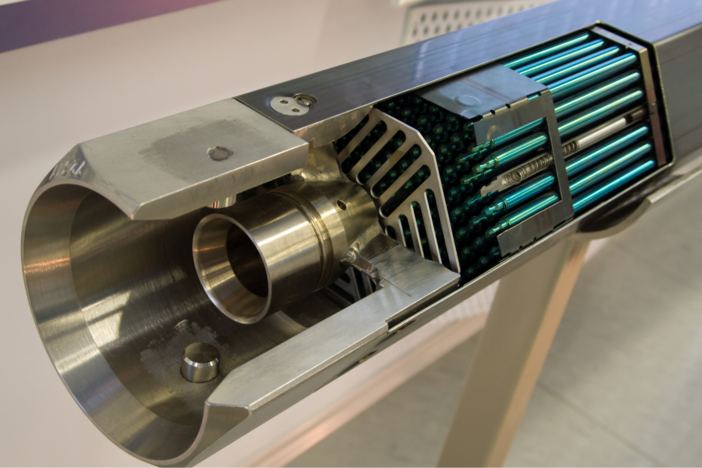
At the front end of the fuel cycle, uranium ore is processed into a concentrated powder called yellowcake. That powder gets converted into a gas, uranium hexafluoride, which is the only practical form in which uranium can be enriched. After enrichment, it’s converted back into a solid, pressed into ceramic pellets, sealed into metal tubes made of zirconium alloy, and bundled into the fuel assemblies that go into the reactor.
Every one of those steps is chemistry. Fluorine chemistry makes conversion possible. Ammonia is a key input in the process that turns enriched uranium into finished fuel pellets. Chlorine chemistry is essential to refining zirconium into a form that can protect fuel inside the extreme environment of a reactor core. And even after the fuel is loaded, reactors depend on carefully managed water chemistry and corrosion-control chemicals to operate safely and efficiently.
Nuclear energy may end with electricity, but it begins with chemistry.
A Strong Safety Record
The United States has been operating commercial nuclear reactors safely for more than 65 years. Today, the U.S. nuclear fleet provides roughly one-fifth of the nation’s electricity and remains the single largest source of carbon-free power in the country. Louisiana itself has hosted two operating nuclear units for decades, both running quietly inside one of the most active industrial corridors in North America.
The technology continues to advance. Many next-generation reactor designs build in passive safety features that rely on natural forces like gravity and convection rather than pumps or human decision-making under pressure. Some advanced fuel types are engineered so that the fuel itself is physically incapable of melting at any temperature the reactor can produce. The safety record of the U.S. commercial fleet reflects decades of progress, and the next generation of designs is pushing that record further.
Why Louisiana
Louisiana already produces, at an industrial scale, many of the chemicals and materials the nuclear fuel cycle depends on: fluorine compounds, ammonia, chlor-alkali products, hydrazine, industrial gases, and specialty materials tied to advanced reactor development. The facilities, the workforce, and the expertise are already here.
At the same time, Louisiana’s growing demand for reliable power, driven by industrial expansion and large-scale data center development, means the state isn’t just positioned to supply the nuclear value chain. It’s also positioned to be one of its most important customers.
The future of nuclear energy will be shaped not just by reactors, but by the chemistry that makes reactors possible. Louisiana is already at the center of that story.
